

no shortcutsTo belief.
What’s gone wrong with the way business shares its biggest ideas, what it takes to make meaning and how that shapes our approach to presentation skills training.
something happensAround a fire.
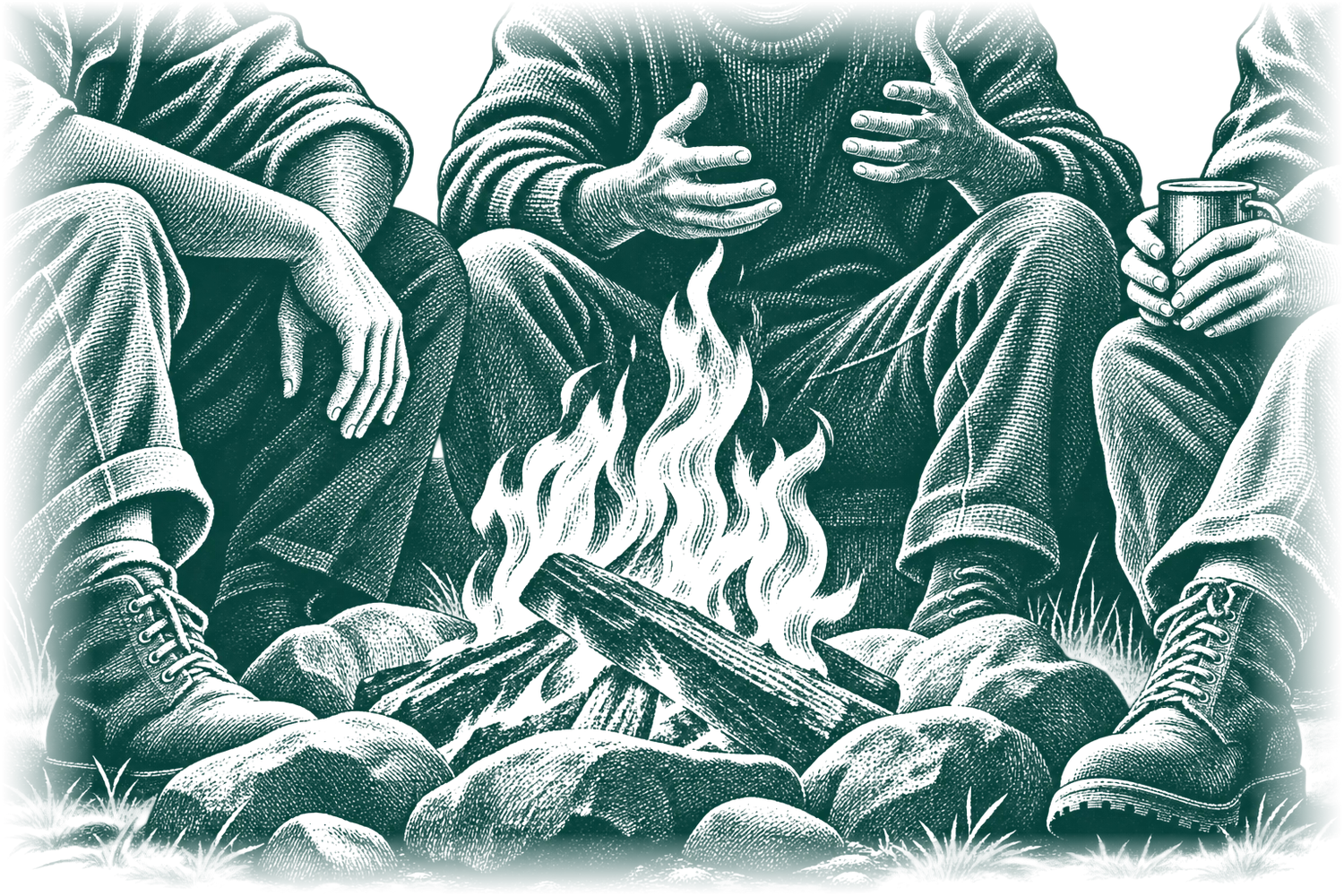
A campfire is wildly inconvenient. You gather the wood, build the fire and keep it going. You move your chair when the smoke finds you, and you smell like it for the rest of the night. We’ve invented far easier ways to stay warm.
And yet we keep building fires. Because warmth was never really the point.
Around a fire, people sit closer. They put their devices down. Someone tells a story, and someone else remembers one. Silences aren’t uncomfortable. Nobody is trying to get through the agenda.
People have gathered this way for a very long time, and something in us still knows what to do when we get there. Modern life keeps offering to make human experiences more convenient by removing the very things that make them human.
But some friction is load-bearing.

we turned itInto a file.
Presentations are the air we breathe in business. They’re how ideas move, how strategies become clear and how leaders create belief in something that doesn’t yet exist. In an idea economy, leaders are responsible for having ideas, making them happen and selling them.
The third is where most good ideas die.
Somewhere along the way, we took one of the most human acts there is, one person helping another understand and believe something, and industrialized it. The deck became the presentation. The medium became the method.
Now everything arrives in a deck. The quarterly results. The Tuesday status update. The strategy. The idea someone has spent three years trying to bring to life. Different stakes. Different audiences. Different ideas.
Same rectangles.
When nothing breaks through, our answer is usually to make more. More slides. More bullets. More polish. More information.
meaning has toBe made.
Now software can make all of it for us. Information has never been easier to produce. It’s becoming free, abundant and almost overwhelming. Meaning, on the other hand, is scarce.
Information can be generated, summarized, organized and distributed. Meaning has to be made. It means understanding the person across the table. Deciding what matters and what doesn’t. Leaving something out. Finding the story. Anticipating where they might disagree. Rehearsing. Standing behind the idea and taking responsibility for whether it moves.
That’s difficult. It should be.
simple isNot easy.
The fundamentals are remarkably simple. We knew them long before presentation software. We knew them around the fire. The Campfire Method organizes them into four promises every presenter makes to an audience.
Know your audience
Know who you’re talking to: what they care about, what they fear and how they might resist. Design for the human across the table, not the role they hold.
Craft your story
Know what you want them to believe, then find the story that can carry it. Not an anecdote. A structure that has moved people for centuries, and still works in a boardroom.
Leverage your environment
Time, place and atmosphere are strategy, not logistics. Create the conditions in which meaning has the best chance to move, whether in a conference room or a video call.
Know yourself
You are the medium for your idea. Not your slides, not your leave-behind. Show up fully, and rehearse like a responsibility, not a ritual.
Four promises. One day.In a Campfire Method Workshop, you and your team learn to uphold these promises in your real presentations.
Explore the Workshop →slides aloneAren’t the problem.
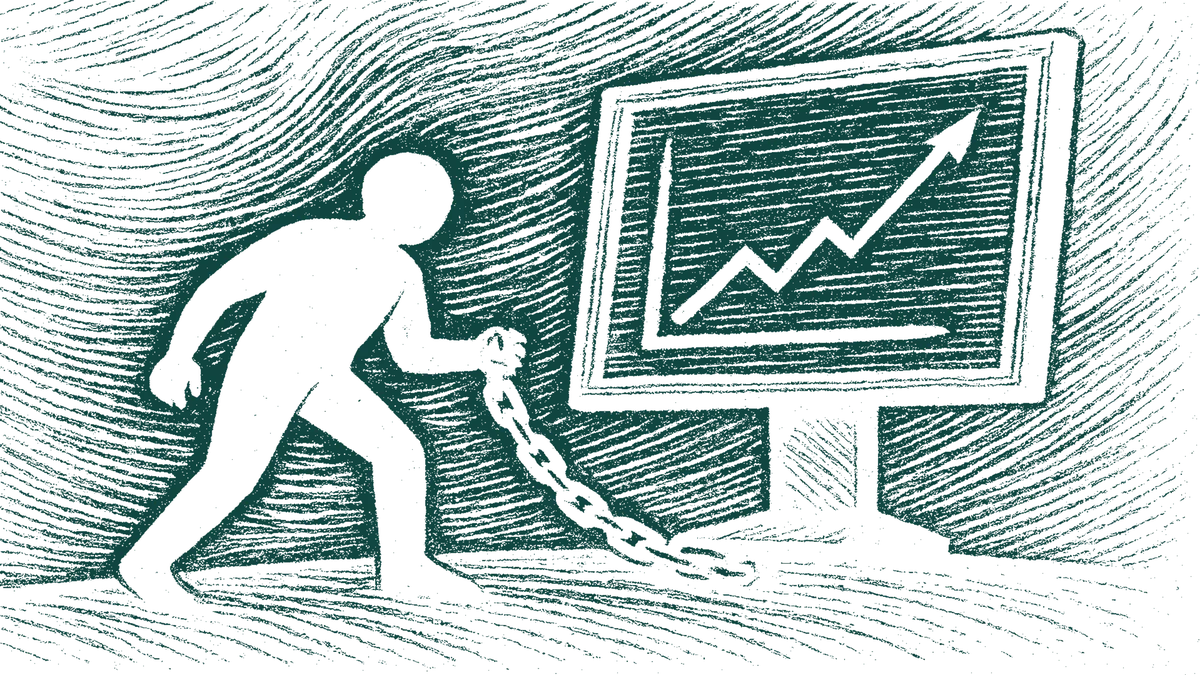
PowerPoint is not the enemy. Slides can clarify an idea, reveal a pattern and show what words can’t. They can make the invisible visible.
The problem is when we stop choosing. When we open the software before we know what we think. When we inherit the template, the room, the format, the sixty minutes and the sixty slides without asking why. When we let convenience make decisions that belong to us.
what braveryReally means.

Being a braver presenter doesn’t mean becoming fearless. It doesn’t mean becoming charismatic. It doesn’t mean becoming someone else.
It means being willing to pop the hood and ask:
- Why do I do it this way?
- Did I choose this?
- Does it serve the idea?
- Does it serve the people in front of me?
- Or have I simply stopped noticing?
Uncomfortable? Good. Once you see the habit, you have a choice.
how weTeach it.
Ideas about presenting are easy to agree with and hard to practice. So we teach by doing.
We don’t
- Lecture on theory you can’t use on Monday
- Hand out frameworks too lofty to remember
- Try to turn you into someone else
- Run a boondoggle that fades by Friday
We do
- Work on a real, high-stakes presentation of your own
- Give you tools simple enough to use the next time you present
- Sharpen the voice you already have
- Build skills that outlast the session, with follow-up built in
Every program is grounded in the science of story and built around The Campfire Method.
A fire doesn’t need to be efficient.It needs to be tended.Let’s get going.
- one leader, one moment
Presentation Sprint
Six weeks of one-on-one coaching for a high-stakes presentation.
- one team, one direction
Campfire Method Workshop
A hands-on day that gives a leadership team one story to rally around.
- one company, one story
Enterprise Storytelling
A shared capability for how important ideas travel through your organization.