

less about us.More about them.
Perkins&Will’s Branded Environments team does work people don’t always know to ask for, so its value has to land with every audience, inside the firm and out. A Campfire Method Workshop gave the team one shared story to start from and a sharper focus on the people it’s presenting to.
- Client
- Perkins&Will, designing since 1935 and consistently ranked among the world’s top design firms
- Program
- Campfire Method Workshop
- The moment
- Making the team’s value clear inside the firm and out
- In the room
- The Branded Environments team from Dallas and Chicago
great work.Presented with empathy.
Perkins&Will’s Branded Environments team brings clients’ brands to life in the spaces they build: signage and wayfinding, murals and graphics, art and brand activations. The team presents almost every week, often every day, to share concepts and design work and to pitch its services.
Pitching takes more explaining than most. Clients know what interior designers and architects do. Branded environments are often something they hadn’t planned for, and the team tells its story to developers and organizations, to architecture firms that could partner on a project and to other practices inside Perkins&Will.
Each of those audiences needed to see the value in its own terms. The team’s leaders in Dallas and Chicago saw how much preparation that was costing.
“Who are we? What are we doing? I think we really know who we are. Why are we changing our story every single time?”Sarah Wicker, Principal, Branded Environments
With several opportunities to pitch on the calendar, they wanted every audience, inside the firm and out, to understand the team’s value and act on it, bringing Branded Environments in from the start of a project.
What we didtheir best instinct,Turned toward the client.
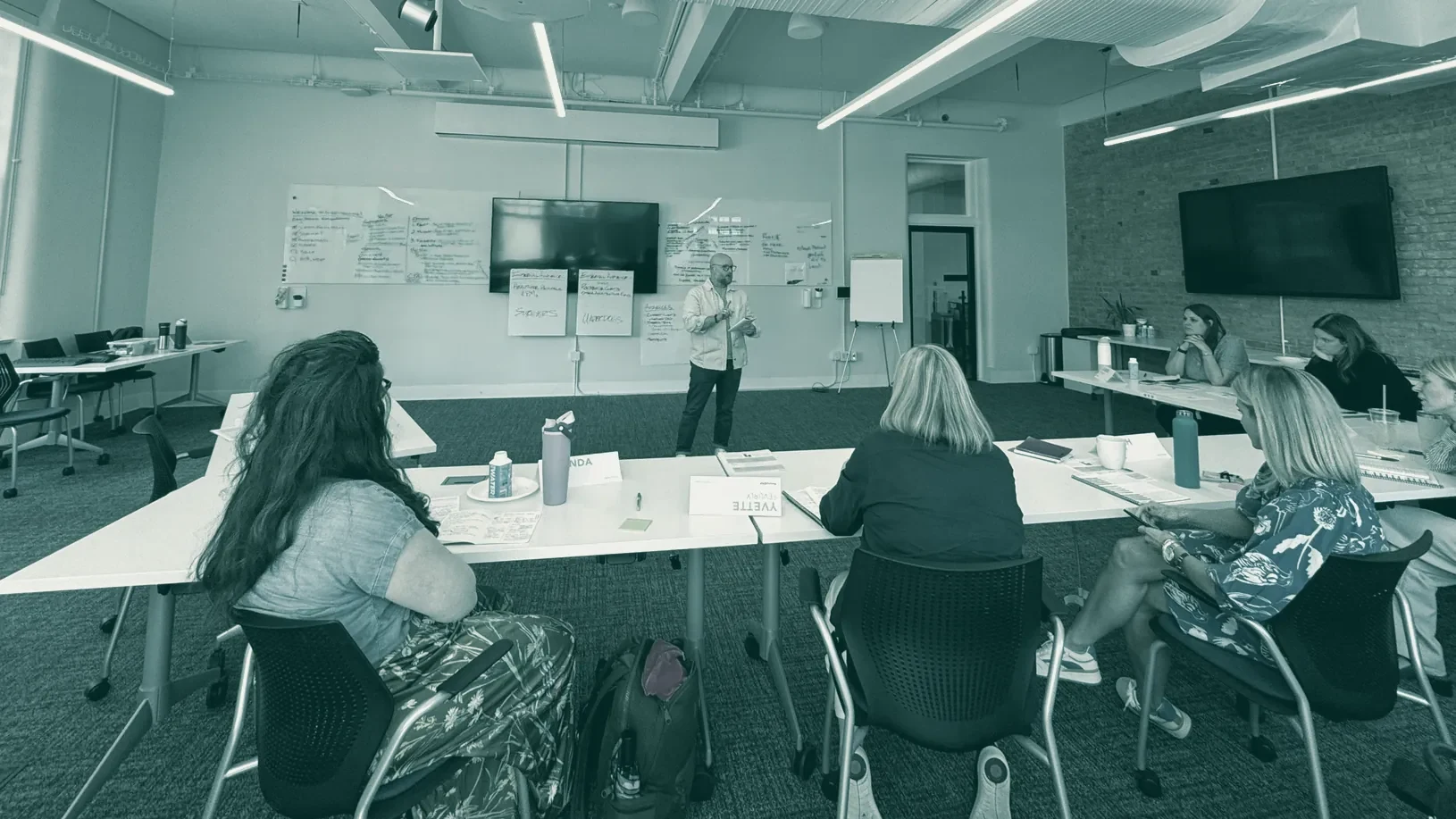
Seven members of the team gathered in the Dallas office for a one-day Campfire Method Workshop. As Sarah put it, “We had no phones and no screens. It was basically pen, paper, bodies.”
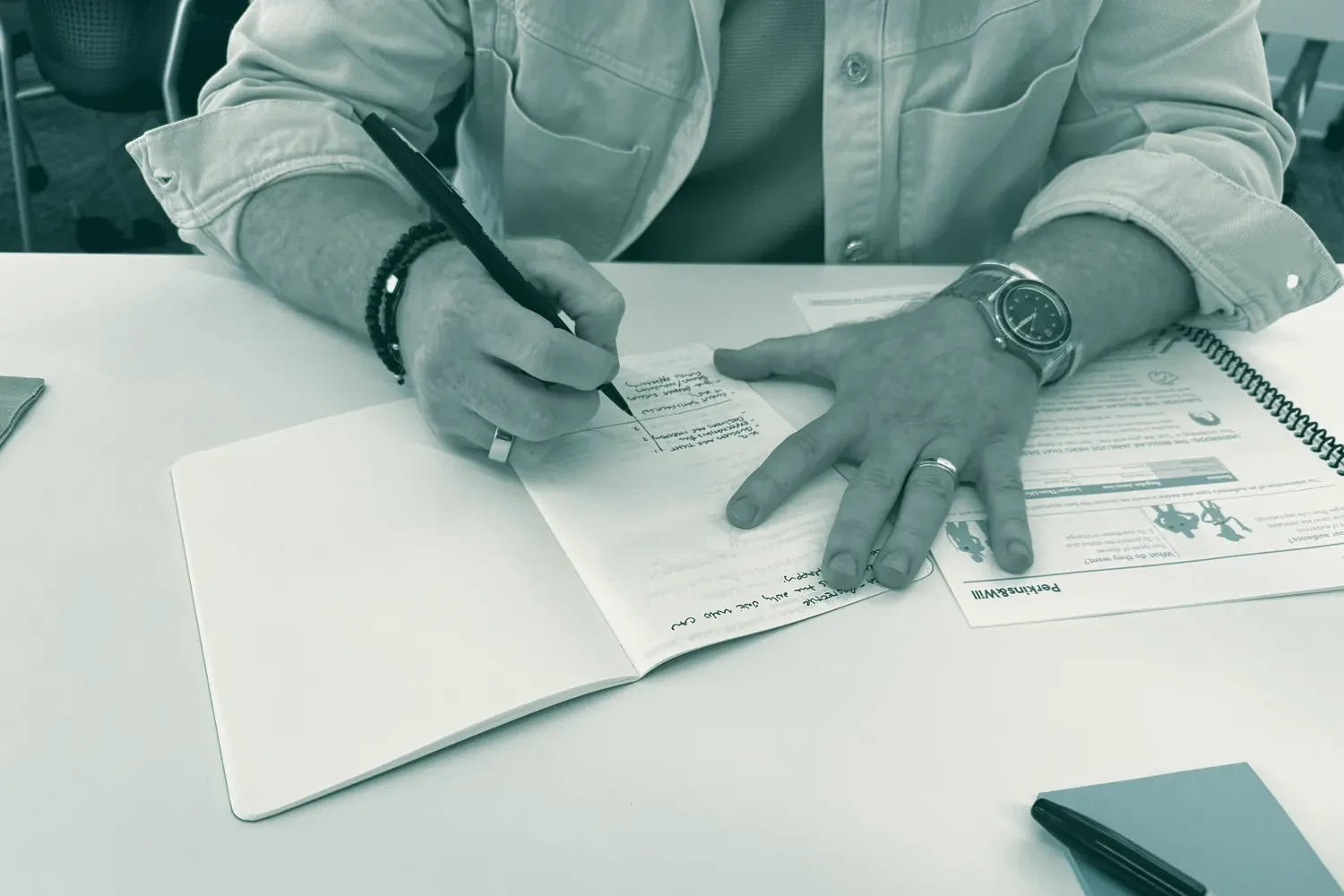
The breakthrough started with something the team already does well. Its designers spend their days imagining the people who will move through a space. In the workshop, the team turned that same empathy toward the person deciding whether to hire them, and what that client might be wrestling with beyond the lobby they asked about.
“The number one thing that stood out for me was empathizing with my client.”Sarah Wicker, Principal, Branded Environments
Quantifying Benefits gave the story evidence to stand on. Clients want data behind their decisions, and working out how each client’s situation would improve, and by how much, lightens the load on the audience and makes the decision easier.
Then everyone practiced. Each person stood up and told the team’s story in their own words, and the team’s leaders heard colleagues describe its strengths in ways they wanted to borrow.
Sarah WickerPrincipal, Branded Environments, Perkins&Will
the audience first.The slides, if needed.
Preparing a pitch used to mean pulling up the familiar deck and recycling it. Now the first conversation is about the people the team will present to and what’s keeping them up at night. Every beat of the story has to answer for itself: what purpose does it serve?
It’s less about us and more about them, because I think we’re more confident in our story.
With the foundation settled, preparation goes into adapting the story to each audience. The day before one pitch, the team spent its time on what that client was facing, from filling the rest of the building to the state of the workplace, well beyond the lobby on the brief.
What enduresa team that believesIn its own value.
Working through the value of their work in healthcare and workplace projects reminded Sarah why it matters. In her words, it makes her feel “less like I’m selling to a client and more that I’m just telling the story of the work.” And everyone left having shaped and delivered it together.
Campfire Method Workshop
A hands-on day for leadership teams to build the stories that move their ideas forward.