
Demystifying Executive Presence
Presence starts with knowing what you stand for.
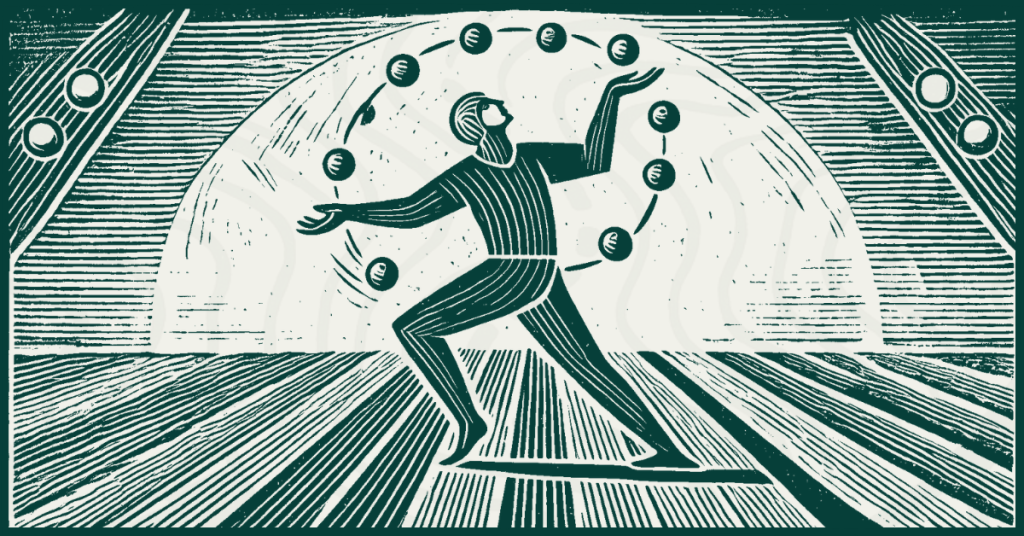
Executive presence starts with knowing what you stand for.
“Did you love your father?”
“Yes.”
“Prove it.”

That scene from Contact still hits. It reminds us how difficult it is to defend (even define) an abstract noun.
Love. Trust. Hope.
Executive presence falls into the same category. Everyone talks about it, but few can define it.
In hiring conversations, performance reviews, succession planning and more, phrases like “she’s got ‘it’” and “he needs to work on his presence” pervade.
It’s treated like a natural-born trait instead of what it really is: a practice. If we look at leaders who inarguably demonstrate presence, we won’t find it in their DNA.
What we’ll see instead is conviction.
Apple cofounder and god-tier innovator Steve Jobs famously and relentlessly pursued quality.
Sara Blakely, the intrepid philanthropist and founder of Spanx, cites risk-taking as the key ingredient in her success recipe.
John Wooden, the winningest coach in NCAA basketball history, focused on the fundamentals, even spending the first practices of the season teaching players how to properly tie their shoes.
Their presence isn’t performance. It’s consistency. We know what they value, even before they speak.
Now contrast that with Aaron Burr’s character in Hamilton, as he advises a restless young Alex to “Talk less. Smile more. Don’t let them see what you’re against or what you’re for.”
Hamilton, a man of presence, retorts: “If you stand for nothing, Burr what will you fall for?”

Burr is the perfect example of what a lack of executive presence looks like. He’s capable. Smart. Polished. But he blends in because he’s unwilling to take a stand.
That’s the paradox of presence: you can’t fake it, and you can’t borrow it. You can curate it, but you can’t control it. It exists in the minds of others, who form their definition of it by your actions.
You can only reveal it.
To define your executive presence, start here:
How would you describe yourself as a leader?
What impact or contribution do you want to make to your company? To the world?
What are your core values? How do they shape how you work and lead?
What do you want to be known for?
These aren’t just self-reflection questions. They’re calibration tools. Once you’re clear on what you stand for, you can show it. You can hold your actions (planned and past) up to your answers and evaluate how well you deliver on them.
To refine presence, practice presentations.
Presence depends on deliberate acts of bringing yourself and your ideas into the room.
And whether virtual or in-person, those rooms are are less about the physical space and more about what happens in them. In business today, the best opportunity you have to improve your presence… is to present.
When you present, you’re not just sharing information.
You’re putting your conviction on display. You’re the medium for your ideas. But most importantly, your actions are the mechanism by which your presence is defined.
It’s not enough to be “in the room where it happened.”
It’s something leaders must practice.
“Presence without purpose is posture, presence with purpose is propulsion.”
keep readingMore from Life After Decks
All issues →



putThe Campfire Method to work
- One reader
A deeper look at how leaders move important ideas from understanding to belief to action.
Get the book → - One leader
Six weeks of focused support for a leader preparing for a high-stakes moment.
Explore the Presentation Sprint → - One team
A one-day experience for leadership teams to build stronger skills for selling complex, high-stakes ideas.
Plan a Campfire Method Workshop → - One company
For organizations that want a shared method for how important ideas travel.
Explore Enterprise Storytelling →