
A Blog with Tips & Tricks for Enlightened Presenters

Most Presentations Are Just the Middle
Most Presentations Are Just the Middle
Steal the three-part playbook to make a complete shape.

Eric Harris
September 18, 2026

I Could Have Drawn It on a Napkin
Now that it’s football season, we’ve found ourselves watching a lot of TV ads again. I’m a recovering advertiser, so I pay a different kind of attention to the thing everyone else calls an interruption. My family tends to reach for their phones or fold a load of laundry while the ads run. I watch and evaluate and see if I can reverse engineer the brief. It’s a hangover from a decade in that business, and I can’t don’t want to turn it off.
Most of what runs is noise.
…ranked number 1 thirty years running, by J.D. Power and Associates…
…if you’ve been injured in a car wreck…
…don’t take Brextrylz if you’re allergic to Brextrylz…
But then I saw the Google Pixel ad.
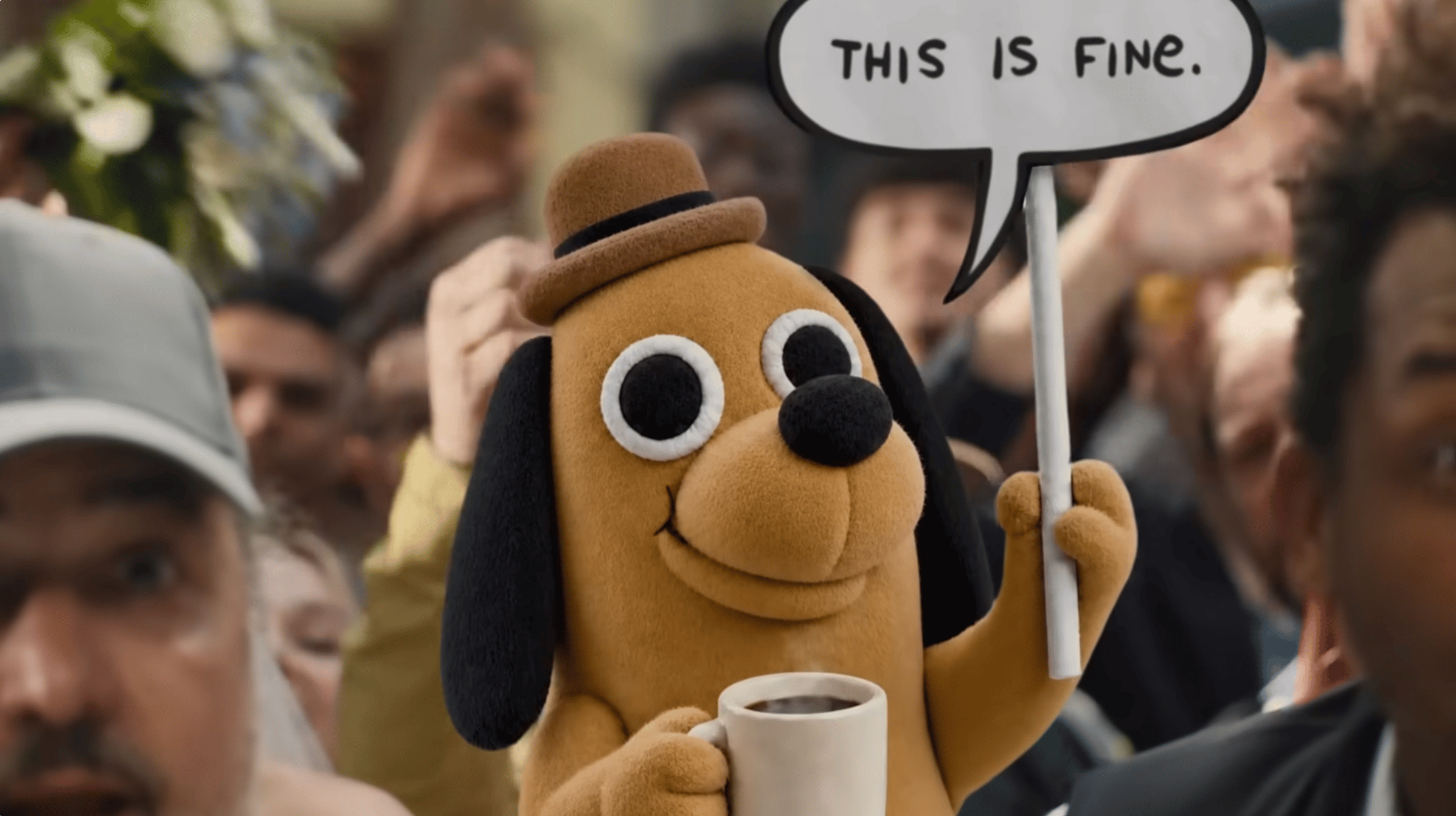
A woman sits at a coffee shop window. Outside the glass, a mob of personified notifications presses in and shouts at her. Her phone lies face-down on the table and pulses light, but only for the people she’s chosen. It’s the babysitter. She takes the call, and the crowd outside is gone.
Life before • The new thing • Life after.
That spot had a director and a budget that could afford Steph Curry. Your Q4 update has you and twenty minutes. But you can steal this shape.
Most Presentations Are Just the Middle
Twenty minutes on what it is. One sentence on why it matters. Nothing at all on what changes.
Most presentations leave the before assumed and leave the after as an exercise for the reader.
We don’t skip this because we don’t care. We skip it because we’re too close. We’ve lived with the idea for weeks, its value feels so obvious that saying it out loud sounds like condescension, time gets short, and the benefits compress into platitudes.
This will drive growth.
This will help retention.
This will streamline operations.
None of that is false. But it’s woefully incomplete.
An audience doesn’t just need to know that something improves. They deserve to know by how much, and for whom.
They’re Taking Inventory
Your audience may look composed. Supportive, even. Underneath, they’re keeping a ledger of what gets better, what gets worse, and what stays the same. Not skeptically. Instinctively.
Behavioral economists call it mental accounting, and we all do it out loud without noticing we’ve done it. We’re paying this agency the equivalent of 4.5 internal FTEs. Loss aversion sits on top, so a vague downside outweighs a vague upside nearly every time.
The before-and-after gets drawn whether or not you draw it.
Leave it blank and they fill it in themselves. Conservatively. Often inaccurately. Almost always in favor of what they already have. Then you get “Interesting. Let’s revisit next quarter.” They nod, and then nothing moves.
Run Three Movements Without the Deck Open
Say each of these in one sentence, out loud, with nothing open in front of you.
-
Before. Your audience’s situation today.
-
The new thing. Your idea, designed to improve their situation.
-
After. Their situation, improved.
The discipline lives in the first movement. Most of us can easily write a before that describes our own problem. The market, the org chart, the backlog, the reason the project exists. That’s your before, and it moves nobody but you. Ask what today looks like for the person you’re asking, and the other two get much easier to write.
There’s a common objection to this, and it’s usually some version of I don’t have numbers. A credible range beats an analysis you don’t have. We call it marketing math, and to make these claims, your inventory is best preceded by “I believe.”
I believe this could lift productivity by 3 to 5 percent in year one.
I believe this could cut rework costs by 10 to 15 percent.
Each statement is plausible and earned. Then they get walked down to Finance or Ops so somebody can push on them.
And when your idea doesn’t move a number, draw it anyway. Numbers are the version that survives a CFO. A before-and-after somebody can picture survives the walk to the next meeting.
What Does Today Look Like for Them?
Which of the three movements could you say right now, out loud, without a deck open behind you?
Whose situation does your before actually describe?
And who would you have to go ask to write the after honestly?
“A whole is that which has a beginning, a middle, and an end.”
The Hardest Movement to Write Is the One About Them
You should be able to run the three movements tonight by yourself. The first one is the problem.
You can’t write somebody else’s before from your own desk, and the people who could correct you are the ones you’re about to present to.
That’s the whole design of the workshop. Groups of about ten, and we spend the time on the presentation you’re actually giving. Somebody with no stake in your idea tells you what your before is missing.
And tell me one thing whether or not anything comes of it: Which of the three movements is hardest for you to write? Hit reply and tell me which one. I respond to every reply myself.
🔥 Hi, I’m Eric, and every week, I share insights, observations and tools so you can ditch decks and light a fire in your high-stakes presentations. If you like what you see here, follow me on LinkedIn.