
A Blog with Tips & Tricks for Enlightened Presenters
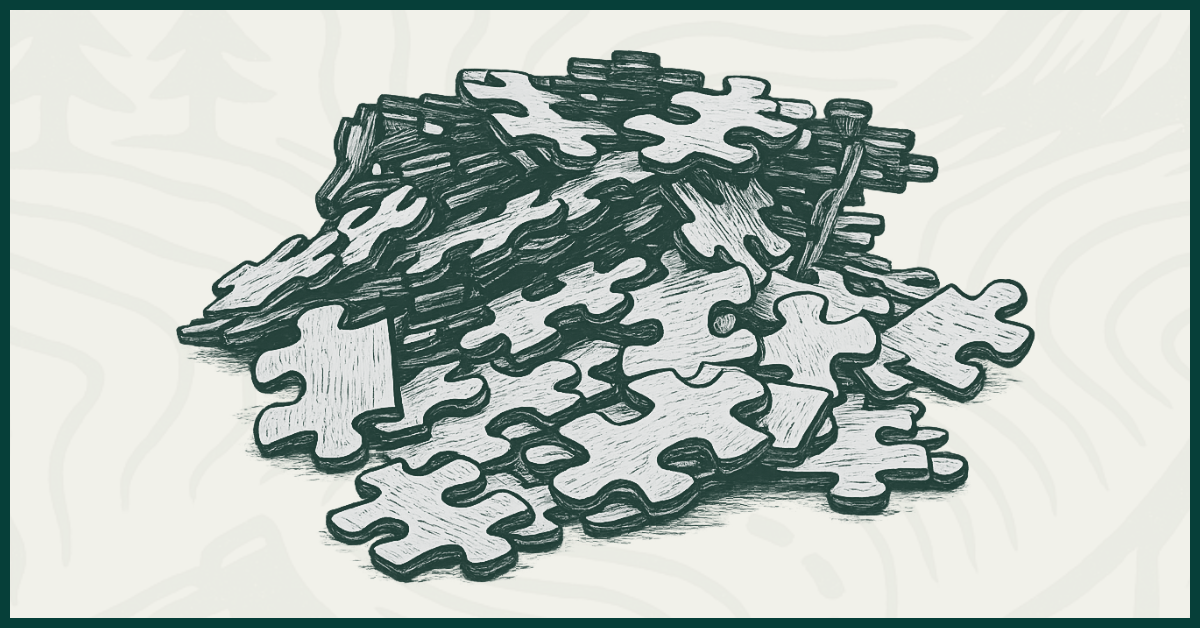
You Handed Them a Puzzle and Called it a Pitch

There’s a particular kind of presentation that feels thorough when you build it and falls flat when you give it.
You prepared.
You organized.
You anticipated objections.
And still… the audience didn’t move. The decision got deferred. The energy stayed flat. Something didn’t land, and you struggle to name exactly what.
Here’s what usually happened: you made the default move. Not the wrong move, per se, but the automatic one. The one that felt responsible and looked like preparation, but actually transferred all the interpretive work to your audience, where it never belonged.
Below are three of those scenarios. Three default moves. One pattern worth breaking.
The Resource Request
You need something: more headcount, a budget revision, a green light on an initiative. The stakes are real and personal. So you do what any enterprising leader does: you build a business case. You model the ROI. You go all crime-scene analyst on the numbers until you’re confident they’re bulletproof. You anticipate every objection and pre-load the answer before anyone can raise it.
The problem isn’t the analysis. The problem is who you think is making the decision.
Your decision-maker isn’t evaluating your spreadsheet. They’re evaluating you. They’re asking a question your model can’t answer: do I trust this person’s judgment enough to give them more? That question usually gets resolved in the first three minutes. In how you frame the ask, how clearly you name the problem, and whether you seem like someone who knows what they need and why it matters.
The answer doesn’t come from column F of your ironclad spreadsheet.
When you lead with data, you’re asking your audience to do the work of connecting the numbers to a narrative. But that’s your job, intrepid presenter. A business case, by itself, is just research wearing a plan’s clothes.
What you need in that room is a story. Wherein the problem is felt, the stakes are imminent, and your audience is clearly the right person to solve it.
The Strategy Rollout
You’ve spent months on this. You know it inside and out, to the point it feels like a favorite recliner. Comfortable, worn, difficult to imagine life without. The market context, the pivots you considered and rejected, the logic that connects every decision. Now you have to bring your team along.
So you present the whole thing. Context, process, conclusions, implications, next steps. You show your work.
It feels like respect. It lands like a lecture.
Comprehensiveness is a form of insecurity parading as thoroughness. Your audience doesn’t need to see how the sausage was made. They need to know one thing: where do I stand in the world this strategy creates? That’s the question humming underneath every strategy rollout, and most leaders never answer it directly because they’re too busy presenting the strategy.
The correction? Simplify and reorient. Stop building the presentation around the work you did. Build it around the experience your audience is about to have. What are they walking away from? What are they marching toward? Answer that early, answer it clearly, and your comprehensiveness becomes context instead of noise.
The Sales Pitch
You’re selling something: a product, a partnership, an idea that needs a yes. You know your material cold. So you lead with what you’ve built: the features, the differentiators, the proof points, the case studies. You give them everything they need to make a decision.
Except they’re not ready to make a decision. They’re still deciding whether you understand them.
Leading with your solution skips the part of the conversation where trust is built. Before anyone cares what you’ve built, they need to feel seen. To recognize their own problem in how you describe it, to sense that you’ve been paying attention to their world and not just rehearsing your pitch. That moment of recognition is what opens the door. Everything you say after that lands differently.
The default move answers a question they haven’t asked yet. The better move earns you the right to question in the first place.
Take Back Ownership
Underneath all three of these scenarios lives the same instinct: when in doubt, put it in the deck. More slides = more detail. Right? More proof that you did the work. Right?
Wrong. A deck is not an argument. It’s not a business case either. It’s just a container.
And when you pour your entire thinking into it and hand it to a room full of people, you’ve just made the audience responsible for assembling the point.
That’s not a presentation. That’s a puzzle.
And nobody agreed to your presentation because they love doing assembly work.
The most careless move in any high-stakes presentation isn’t being under-prepared. It’s outsourcing the work to unexamined habits (like slide s) and calling it done. The slides don’t know your audience. They don’t read the room. They can’t feel when the energy shifts and adjust.
Only you can do that. But only if you’ve done the work.
The right work.
“But with time and effort, almost any habit can be reshaped.”

Love the Smell of Paper?
Good, because guess what. BOOK.
The Campfire Method: Give Presentations the Respect They Deserve is coming soon, and I’m looking for three early readers to help me shape it before it launches.
It’s taken me ten years to write it, but you can read it on a long flight. And I’d love your cocktail-napkin thoughts.
If you’re passionate about storytelling for high-stakes presentations and want to read more than one article a week, send me an email.
🔥 Hi, I’m Eric, and every week, I share insights, observations and tools so you can ditch decks and light a fire in your high-stakes presentations. If you like what you see here, follow me on LinkedIn.