
A Blog with Tips & Tricks for Enlightened Presenters
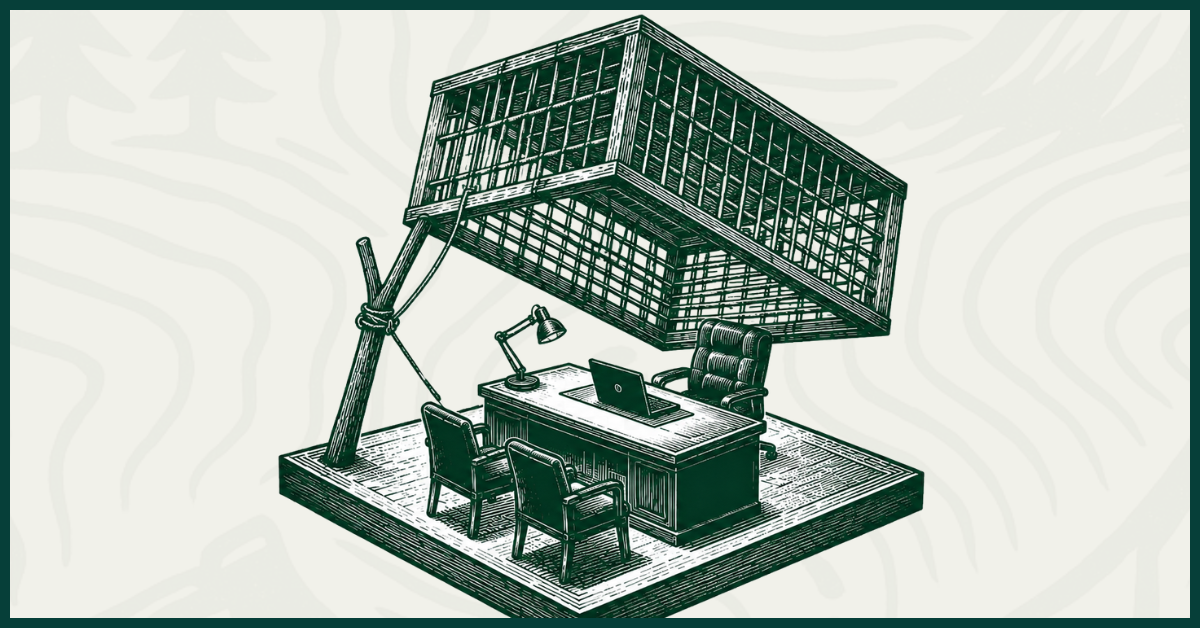
The Room is Never Neutral

Say Yes to the Duress
So many pitches die before anyone speaks. The death occurs weeks earlier, in a two-line email, when somebody agrees to the wrong room at the wrong time because that’s what was available.
I know because I’ve written that email.
Waiting Outside Her Door
Several years ago, my team and I were presenting brand ideas for a new leadership program at an enterprise organization. We were meeting with the CHRO, and we were proud of that.
The project was on track, and even had a little breathing room in the timeline. This was the initial concept presentation, where we were setting the direction for the rest of the work.
Her admin informed us the meeting would take place in her office, because there were no conference rooms available. The only time on her calendar was 4pm. On a Friday. The last day of the month.
We agreed. Big mistake.
We prepared, we rehearsed, and we entered their headquarters having convinced ourselves we were all going to align on our recommendation and hold hands skipping into the next phase of work.
But when we arrived at her corner office, the door was closed. Her admin informed us that not only was it payday, but there were several month-end initiatives that were all coming to a head. Reports were due. Her CEO’s board meeting was the following Monday. And on top of that, there was a widespread FMLA policy issue affecting several employees’ paychecks.
We were asked to wait. Indefinitely.
By the time her door flew open and the previous guests shuffled out, it was 5:15.
She looked at us, then at her watch, then I swear I saw her look toward the parking garage, longingly. She had forgotten about our meeting. “Come on in,” she sighed.
My teammate and I occupied the seats across from her desk, and we felt compelled to address the elephant: “We know it’s late on a Friday, so we won’t take much of your time.”
We literally started the presentation by apologizing for the time we were about to take. Talk about cutting an idea off at the knees.
The presentation felt more like an episode of The Pitt. Every ninety seconds, her phone dinged, buzzed, rang. Emails flooded her inbox, which we could see piling up on her monitor.
She had also left the door open, an invitation to higher-priority guests. What I’m doing in here isn’t so important that you can’t interrupt me.
Oof.
We didn’t land on a concept. We didn’t even come close. We left with more questions than answers, and the project spiraled out of control for several weeks. All the breathing room we had in the timeline collapsed into rework, overthinking, and underdelivering.
Even with solid work and a decent relationship with our audience, we’d let the environment sabotage our presentation.
Facing the Mirror
For a while we told ourselves we were unlucky. Bad day, tough audience.
That story flattered us and taught us nothing. The truth is a harder pill to swallow: she never had a chance to believe us, because we handed our idea off to conditions built to kill it. Three levers sat within reach the whole time, and we touched none of them.
Time. Never 4pm on a Friday. For a decision that matters, hold out for a 9 to 11am slot, when analytical attention peaks, even if it costs you a few days’ wait. We had the days. We spent them waiting outside a closed door instead.
Location. Neutral ground, always. Inside her office, our idea competed with everything on her desk and lost to all of it. You will never outrank the rising pile of priorities within eyesight.
Atmosphere. Whatever the room feels like is what your audience carries into your idea. Her room felt like payday, board prep, and a payroll crisis. That left no room for us, or our idea, no matter how valuable.
Running the Audit
Now, before any high-stakes presentation, I run a simple exercise with my team. We build a matrix together.
Two columns: Ideal and Okay.
Three rows: Time, Location, Atmosphere.
That matrix became the Environment Planner in The Campfire Method, and it was born in the hallway outside her door.
Time. What will they be walking out of when they walk into this? What’s on their calendar that week that could eat this meeting alive? What’s the best morning slot I can get, and how long am I willing to wait for it?
Location. Whose territory is this room, and what competes with me there? If this idea could choose its own space, where would it be strongest?
Atmosphere. What will they be feeling when they arrive, and what do I need them to feel before I open my mouth? What can I remove: the open door, the phone on the table, the laptop screens? What can I add: music, lighting, temperature?
Write your Ideal. Then write your Okay, the minimum conditions under which this idea can still win. Anything below Okay is a decision to lose politely. Negotiate, or wait.
And when you push back on a time slot, remember what the pushback signals. This idea deserves a moment it can actually win.
Deciding What Your Idea Deserves
Your next high-stakes moment is already forming on someone’s calendar. Before you accept the invite, sit with three questions.
-
What does this idea deserve that you haven’t asked for yet?
-
What have you been ascribing to “process standards” that was always a choice?
-
And when the admin offers 4pm on a Friday, what will you say?
The room is never neutral. You either design it, or you inherit it.
I inherited one once. It cost us weeks.
“We are surrounded by places. We walk over and through them. We live in places, relate to others in them, die in them. Nothing we do is unplaced.”
Don’t Settle for Less than the Environment Your Idea Deserves
The Environment Planner walks you and your team through the Ideal vs. Okay audit before your next high-stakes presentation.
🔥 Hi, I’m Eric, and every week, I share insights, observations and tools so you can ditch decks and light a fire in your high-stakes presentations. If you like what you see here, follow me on LinkedIn.