
A Blog with Tips & Tricks for Enlightened Presenters

Hi, Stakes

They’re Deciding Whether to Believe
That’s the test. “High-stakes” has nothing to do with how many people are watching, or whose logo hangs behind you. It’s all about whether belief is on the table.
Most presentations don’t clear that bar, and they don’t need to. Status updates, readouts, the Tuesday sync. Information moves, everybody gets in, gets out, and gets on with their lives.
But five stand out every time. Two of them point inward, into your own company. Two point out, toward your market. One points up, and that’s the one leaders fumble most, because it’s where they stand to lose the most, but don’t have the luxury of practice.
In all five, you’re the medium for your ideas.
And in all five, you likely reach for slides instead.
1. The Strategy Rollout
Name what’s ending, or the audience carries both.
Only 5% of employees understand their company’s strategy, according to HBR.
The rollout is usually a deck. Fifty slides built by the strategy team, parked on a server, presented by an executive who wasn’t in the conversation when it was written, then handed to managers as a file they’re expected to “cascade.”
The deck feels responsible. It’s thorough. It survived review. It can be distributed. Nobody gets fired for thorough.
But thoroughness isn’t the job. The job is changing what thousands of people do on Monday morning, and nobody changes their behavior because slide 23 covered every case.
Strategy rollouts are notorious for highlighting what’s new and staying silent on what’s ending. So employees stack the new work on top of the old, carrying both through the summer, and burning out by fall. Then a frustrated executive team reads the exhaustion as resistance.
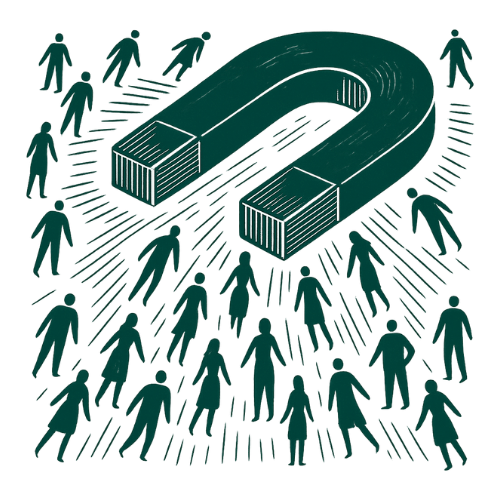
A successful rollout names the tradeoffs out loud. It shows people where the company is going, what ceases, and where their work fits. They can see the future you’re describing, and they want a hand in building it.
It’s a magnet, not a memo.

2. The Sales Presentation
They already read it, or already decided not to.
Copy, paste, reformat, present. The RFP response becomes the deck.
By the time you walk in, the buyer has held your response for days. They either know it, or they’ve chosen to ignore it. Either way, walking them back through the same document adds close to nothing. It’s a parade of thoroughness.
And while you prove every box got checked, they’re deciding something your document can’t answer. Do we want to work with these people?
That’s the live question. The document already handled the information. The hour in front of them should handle trust, judgment, chemistry, and everything they can’t get by reading.
So resist the urge to explain. Take that buyer on an adventure. Tell them a story.
Nobody scheduled an hour to hear an RFP read aloud.

3. Change Communications
Every phrase survived legal. None survived a human being.
Operating model. Ways of working. Strategic realignment. Transformation roadmap. OKRs and KPIs.
The language goes through review until it stops meaning anything. Six approvals in, every sentence is defensible and none of it touches anybody’s actual job.
So everyone nods, but nothing lands. They walk out fluent in the approved vocabulary and still missing the three answers they came for. What’s changing? Why now? What does this mean for my role?
The communication explains the change without helping a single person understand it.
You handed them a puzzle and called it comms.
4. The Capabilities Presentation
Nobody buys because of what you can do.
A pitch answers a question. A capes deck is what a company says when nobody asked.
It’s the closest thing most companies have to a self-portrait, and it lives buried on a server, built by someone who left two years ago, labeled something like CAPES_2026_V12r17_Final_USE-THIS-ONE.pptx.
Nobody presents it as-is, because everybody knows it doesn’t fit. So it gets rebuilt. New logos, different photos, a rewritten approach section, usually at 11 p.m. by whoever drew the short straw. Multiply that across a year and you have a company re-inventing itself, over and over, in private.
The person on the receiving end gets the same experience every time: Credentials. Projects. Awards. Team bios. They keep moving through slides and never arrive.
Because the deck answers one question: What can we do?
They’re asking a different one: Do you understand what I’m dealing with?
A generic deck can’t answer that, because someone wrote it before anyone asked.
A road to nowhere, forty slides long.

5. The Board Presentation
It could have been you.
I sat with the CEO of a large municipal utility recently, and he told me his organization presents deck-forward. He also told me he carries most of his team’s work to the board himself, because he doesn’t see them as board-ready.
“Everything and the kitchen sink in slides,” he said. His leaders bring all of it, and they still don’t connect with the people across the table. He understands why they do it. Until they learn to engage, he’ll keep “falling on that grenade” (his words).
He’s protecting them. He knows it. And he’s worried about what it tells them.
Here’s what separates this presentation from the other four. Nobody rolls out your strategy for you. Nobody carries your capabilities story to a buyer. But somebody more senior will absolutely take your board meeting, and they’ll do it out of kindness. Up is the only direction where the presentation gets torn from your hands.
It’s also the most likely direction where the deck stops being habit and starts being armor.
In the other four, the deck is process. Somebody built it, everybody inherited it, nobody questioned it. In front of a board, every slide has a reason, and the reason is fear. Every question you dread gets a slide. Every gap gets an appendix. You walk in with more slides than minutes, because underneath all of it sits the fear of getting asked something you can’t answer.
The damage stacks up in layers.
A board is deciding whether they can trust your judgment when they aren’t there. Coverage answers a question nobody asked and dodges the one they did.
Volume reads as a tell. Executives see a hundred slides and read an inability to prioritize. The armor indicts you.
It eats the only valuable part of the hour. Their judgment is what you came for, and you spend the time on information transfer.
Then there’s the vicious spiral my client is living in. He protects his people from the board, which keeps them strangers to the board, which keeps them armored, which keeps him falling on the grenade. His team stays not-board-ready because the protection works.
My advice to him? Train his leadership team to see the board as people. More than that, people who want them to succeed. Boards ask hard questions because they have a lot riding on leaders, and because they’ve been trained at the highest levels of business to find gaps in a plan. None of it is malicious. None of it is about tearing anyone down.
They were never adversaries.
Most leaders never get close enough to realize that. Adrenaline gets in the way. A board feels precious, arm’s-length, the kind of counsel you don’t casually get to know, so presenters walk in having never known this audience the way they know most others.
So I told him what his leaders should do. Then I told him it asks something of him, too. He has to give them access to the board in other settings, so those relationships have somewhere to form.
After that, the presentation changes on its own. You walk in with the decision you want, what you’d do if the call were entirely yours, and the thing worrying you most, said out loud, by you, before anybody finds it. Naming your own risk first builds trust faster than anything else available to you.
Keep the appendix. Boards use it, and it’s real backup. It just stops being the presentation.
The Deck was Never for Them
Line all five up and you’ll see the pattern.
-
The rollout deck protects the strategy team from being misquoted.
-
The change deck protects compliance.
-
The sales deck protects the seller from forgetting something.
-
The capabilities deck protects a company from having to decide who it is.
-
The board deck protects the presenter from getting caught off-guard.
All five are self-preservation dressed up as diligence. DeckPendency is a cute name for an ugly mechanism.
In every case, the audience pays. In confusion. In an hour they don’t get back. In a decision they make about you based on information instead of connection.
Many of us have convinced ourselves more material means more care. Most of the time, more material means less exposure.
You’re the medium for your ideas. You can’t be the medium while you’re hiding behind one.
“I have my books / And my poetry to protect me / I am shielded in my armor”
On the Horizon
Two of these five are probably already on your calendar
I’m not going to pretend a newsletter alone fixes any of them.
But if you read two of these five and recognized your own quarter, that’s what we do with leadership teams. We take the presentation that matters most, strip it back to what you actually want people to believe, and rebuild it so you can carry a story instead of a deck of slides. Groups of about ten, so everybody gets reps.
If that’s your fall, get in touch and tell me which of the five is yours. I’ll shoot straight whether we can help.
🔥 Hi, I’m Eric, and every week, I share insights, observations and tools so you can ditch decks and light a fire in your high-stakes presentations. If you like what you see here, follow me on LinkedIn.