
A Blog with Tips & Tricks for Enlightened Presenters
Looking Back and Forward
It’s January. What kind of year will it be?
The town hall is scheduled. The kickoff is outlined. Vision memos are circulating in half-finished drafts. Somewhere, a brand-new slide deck is born, lovingly assembled over dozens of hours, destined for one brief moment in the spotlight.
Then it disappears.
It gets uploaded to a server, emailed as a PDF, and quietly joins the graveyard of “important strategy decks” no one ever opens again.
If that sounds familiar, you’re not alone. It’s one of the most common steps leaders take when communicating strategy, and it keeps happening because we’ve confused activity with clarity.
The magic was never in the slides. It was always in the story.
And long before PowerPoint, humans had a better handle on how to lead people through moments like this.
A god built for January
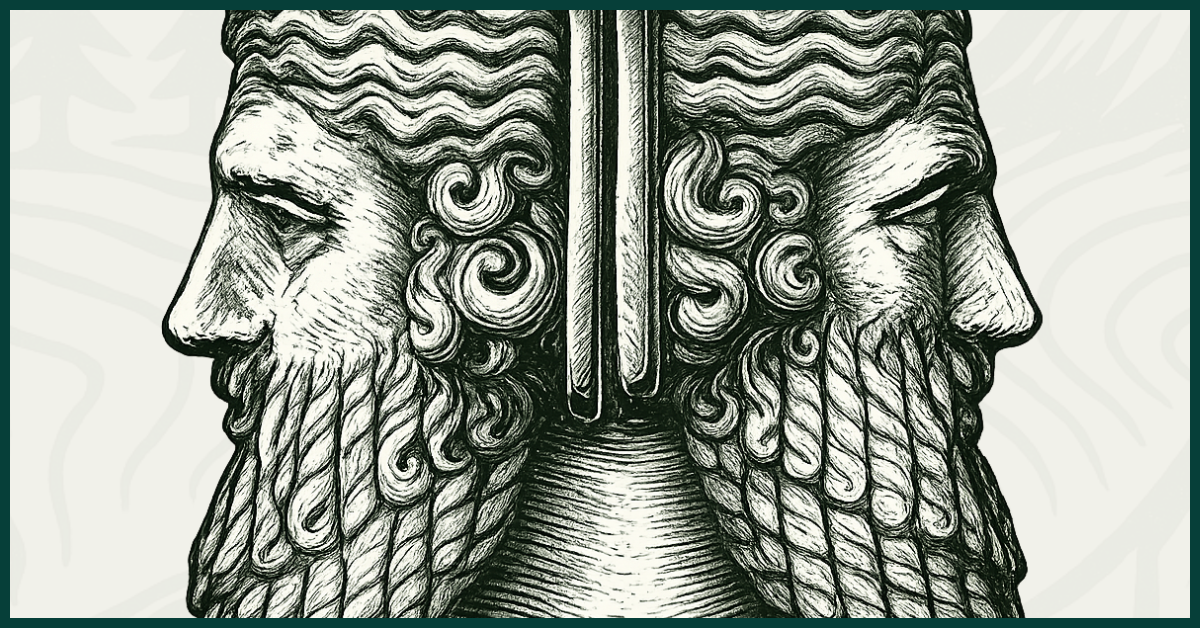
The Romans had a god specifically for transitions. Janus. The god of doorways, thresholds, and beginnings.
He’s always shown with two faces. One looking back. One looking forward.
While that might feel like decorative symbolism, it’s actually a leadership instruction manual.
Because the real work of January isn’t announcing what’s next. It’s helping people cross a threshold, acknowledging the work that’s already happened.
Most strategy decks fail right here.
They sprint past the past, oversell the future, and leaders often spend the rest of the year wondering why nothing stuck.
The uncomfortable numbers
Let’s put some data under this.
According to Harvard Business Review, 95% of employees don’t understand their company’s strategy.
Not “disagree with it.” Not “resist it.” Don’t understand it.
At the same time, the volume of change has exploded. Since 2016, the number of organizational change initiatives has roughly doubled.
Change is no longer episodic. It’s ambient.
And yet employees’ willingness to support change has dropped sharply, from roughly three-quarters of the workforce to well under half.
More change. Less buy-in.
Gartner doesn’t blame this on lazy employees or weak leaders. They point to organizational culture and communication norms. In other words, the environment leaders create, and the stories they tell inside it.
Your strategy problem is a story problem.
When employees don’t understand strategy, performance suffers. Alignment fractures. initiatives stall. Leaders respond by adding more slides, more charts, more words, assuming clarity comes from volume.
It doesn’t.
Understanding comes from meaning. Meaning comes from story.
If you want to improve performance against strategy, you improve understanding of strategy. To improve understanding, you improve how you communicate as a leader.
That starts by respecting how humans actually move through change.
Which brings us back to Janus, not as mythology, but as method. What can the Roman god of transitions teach us about communicating strategy?
1. You earn the future by honoring the past.
Before you talk about where you’re going, acknowledge where people have been.
The wins that mattered. The fatigue that lingered. The false starts no one wants to name. The lessons learned the hard way.
Skip this, and your vision feels abstract, corporate, and oddly hollow. Name it, and people feel seen. Trust starts to form.
You earn the right to ask for change.
2. Vision works because of contrast, not optimism.
Most leaders describe the future like a postcard. Clean. Bright. Aspirational.
But people don’t change because the future is shiny. They change because the present is heavy.
Strategy lands when the future is framed as relief. A solution to friction people already recognize in their own work. When you connect tomorrow directly to today’s pain, belief forms without coercion.
That’s storytelling doing the real work.
3. Transitions need bridges, not orders.
January is a threshold. People are mentally stepping from one year into the next, carrying baggage whether you acknowledge it or not.
Great leaders don’t shove people across that gap with a mandate and a timeline slide.
They build a bridge.
They explain why this story makes sense now, given everything that came before. They show how the past logically leads to this next chapter.
That’s how change becomes navigable.
The deck won’t cut it. The narrative might.
If you’re starting the year with a message, resist the urge to open PowerPoint first.
Instead, build the narrative:
-
Look back long enough to establish trust.
-
Name the present clearly enough to create urgency.
-
Look forward in a way that feels earned.
-
Then connect the dots so people can walk the bridge with you.
That’s the work. That’s strategic storytelling.
And in a world where change keeps accelerating and patience keeps shrinking, leaders who can tell strategy like a story won’t just sound better. They’ll be understood.
Embrace storytelling and start the year strong.
“Plans are nothing. Planning is everything.”

Tired of Sales Presentations that Suck?
Are you in sales? Do you present?
You won’t want to miss Storytelling for Sales. In this webinar, Libby and I are going to pull apart the traditional sales presentation and offer suggestions to replace bad habits (monologuing, feature dumping, droning demos) with time-tested, relatable storytelling techniques.
If you’ve ever lost a buyer to a bad presentation, this webinar is for you.
You’ll Learn how to turn ghosted, slide-stuffed pitches into story-first conversations backed by a clear, visual leave-behind to carry the story forward.
🔥 Hi, I’m Eric, and every week, I share insights, observations and tools so you can ditch decks and light a fire in your high-stakes presentations. If you like what you see here, follow me on LinkedIn.