
A Blog with Tips & Tricks for Enlightened Presenters
You Are the Medium Now
When the Deck Disappears
Two presenters walk into two very similar rooms.
Same company. Same level. Same stakes.
The first presenter arrives early, clicks through her slides, acknowledging one of her slides is “a bit of an eye chart.” She keeps one eye on the screen behind her, one hand on the clicker, and one thought in her head: I hope this lands. When a question comes mid-way through, she says, “We’ll get to that,” and mentions a slide that promises clarity later. It never arrives.
The audience leaves interested, but confused. Aware, but unmoved.
The second presenter walks in with nothing in her hands.
No clicker. No deck. Just a legal pad, mostly unused. She opens by naming the moment the audience is in, why it matters, and what decision they are here to make. When someone interrupts with a question, she pauses, thinks, and answers it directly. Her words feel shaped, deliberate, owned. When she finishes, the room is quiet for a beat. Then people start talking to each other about what they just heard.
Same idea. Two outcomes.
The difference isn’t performative. It’s something more fundamental.
One presenter was hoping the deck would do the work.
The other accepted she was the medium.
Ideas Travel Differently
Selling a physical product is transactional. Money changes hands. The buyer can touch it, test it, return it, complain about it. The product exists independently of the person who sold it.
Ideas don’t.
An idea lives entirely in the audience until they choose to carry it forward. You can’t install it. You can’t force it. You can only earn belief.
And belief is purchased with two resources far more valuable than money.
Time and attention.
When an audience gives you their attention, they’re giving you access to their thinking. They’re allowing you to occupy the commanding seat, if only temporarily. It’s a form of trust presenters must earn.
When that trust is squandered by hiding behind visuals, defaulting to habit, or letting slides shoulder responsibility they weren’t designed to carry, the damage isn’t just boredom. It’s credibility.
If you want to lead in an idea economy, presence isn’t optional. It’s currency.
You can Change the Rules
When you commit to stepping away from slide decks, you accept a new responsibility.
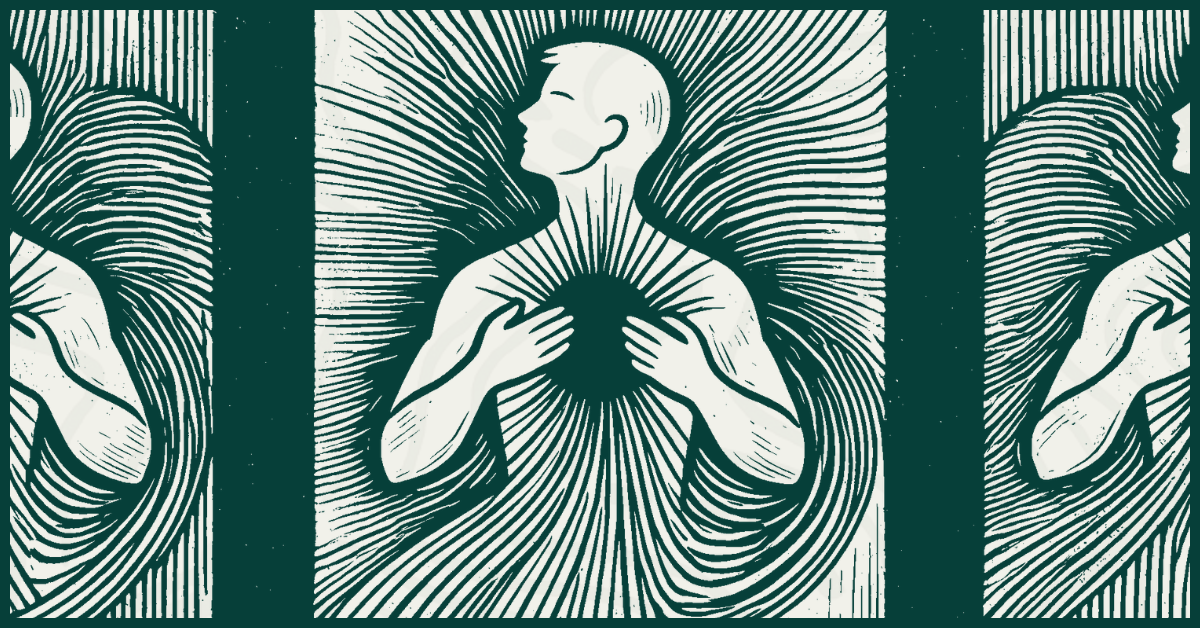
You become the medium for your ideas.
Every pause matters. Every word choice matters. Every moment of hesitation or conviction matters. There is no visual buffer. No safety net. No place for belief to hide.
That’s why persuasive presence can feel risky. When the spotlight is fully on you, you are also the single point of failure.
But it’s also the moment real leadership becomes possible.
You don’t have to be Christopher Nolan or Jane Austen to do this. You don’t have to borrow someone else’s genius or performance style. You get to be you.
In fact, you have to be you.
Because slides don’t move people. People move people.
And they only do it effectively when their presence is aligned with their message.
Flexes, not Faults
Average presenters fixate on weaknesses as if imperfections were permanent sentences. We reject that framing.
Think in terms of strengths and opportunity areas instead.
Decades of Gallup research prove people grow faster and perform better when they build around innate talents rather than obsessively trying to repair every shortfall. The same principle applies to presence.
Your goal is not to become someone else. Your goal is to become a clearer, more intentional version of yourself.
Sounds Harsh, is True
Every time you stand in front of an audience, you land somewhere on a simple but honest spectrum.
Forgettable
People listen politely, nod along, and move on. Your core idea evaporates as soon as the meeting ends. When this happens repeatedly, you don’t just lose influence. You train people not to expect much.
Acceptable
You cover the essentials. Facts register. No one is confused. But no one feels compelled to act. Acceptable isn’t always wrong, but it doesn’t ignite change.
Exceptional
Trust is earned early. Attention is sustained. The audience repeats your idea to others and knows exactly what to do next. Exceptional presence doesn’t just inform. It moves.
The goal is not perfection. The goal is awareness.
The 14 Persuasive Principles
After studying and coaching more than 5,000 presentations, my team and I identified 14 principles that consistently predict whether an idea actually lands.
They fall into three clusters.
Essentials (1–5): Brevity, Levity, Repetition, Socialization, Focus
These are foundational habits. Without them, nothing else matters.
Dramatic Elements (6–10): Setting, Protagonist and Antagonist, Conflict, Call to Action, Shapeliness
These shape how your idea is experienced, not just understood.
Intangible Presence (11–14): Authenticity, Flexibility, Ownership, Attitude
These are the invisible forces audiences feel immediately, even if they can’t name them.
Together, they form a practical map for persuasive presence.
The 8-Minute, High-Impact Rehearsal Adjustment
Exhale. You don’t need to “practice everything.” You need to practice intentionally.
Here’s how to do that in eight minutes:
Minute 1–2: Choose a talk
Pick your most recent high-stakes presentation. Board update. Client pitch. Leadership meeting.
Minute 3–5: Rate yourself
For each of the 14 principles, honestly evaluate: Forgettable, Acceptable, or Exceptional.
Try not to think about how these ratings make you feel, and instead focus on your honest assessment of what the audience perceived.
Minute 6: Identify strengths
Circle every principle you rated Exceptional. Write one sentence for each explaining why it feels natural.
Minute 7: Pick growth zones
Choose up to three Acceptable principles that could move toward Exceptional. Write one small rehearsal action for each.
Minute 8: Choose one focus
If anything landed as Forgettable, pick just one. Write the simplest next step you could take to improve that criterion before your next talk.
That’s it.
Now you know exactly where to invest rehearsal energy, instead of practicing aimlessly and hoping confidence materializes.
Presence is Ownership
When you stop outsourcing to slides, you will see a transformation. Your language sharpens. Your pauses gain gravity. Your audience senses you stand behind what you’re saying, and they join you there.
On stage, you and your idea are inseparable.
Your audience is not captive. They are choosing, moment by moment, whether you are worth their time.
If you want them to lean in, bring something worthy of their attention.
You.
“I don’t want to take advice from fools.
I’ll just figure everything is cool,
Until I hear it from you.”
Campfire Method® Reflection
Zach Nathan used to prepare for presentations like many leaders do: Stand up the deck, obsess over slides, include all the data… Ultimately to lead his audiences through a static reading of the deck.
After his experience with the Campfire Method, he’ll never approach another presentation that way again. Now he has the tools to boil his idea down to its essence, establish real empathy with his audience, take them on an unforgettable journey, and show up like the leader he is.
Watch Zach describe his transformation:
.generic-embed–root {
padding: 14px 19px 14px 19px;
}
.generic-embed–root:hover {
filter: brightness(90%)
}
.generic-embed–root a {
text-decoration: none !important;
}
.generic-embed {
background-color: #063F39FF;
border-radius: 5px;
border: solid 1px #82B9C4FF;
}
.generic-embed–wrapper {
min-height: 75px;
border-collapse: collapse;
width: 100%;
display: flex;
}
.generic-embed–title {
color: #063F39FF;
font-size: 14px;
font-weight: bold;
padding-bottom: 8px;
}
.generic-embed–description {
color: #2D2D2D;
font-size: 13px;
padding-bottom: 8px;
}
.generic-embed–link {
color: #82B9C4FF;
font-size: 12px;
}
@media only screen and (max-width: 640px) {
.generic-embed–image {
width: 100% !important;
padding: 0px 0px 12px 0px !important;
}
.generic-embed–wrapper {
flex-direction: column;
}
}
🔥 Hi, I’m Eric, and every week, I share insights, observations and tools so you can ditch decks and light a fire in your high-stakes presentations. If you like what you see here, follow me on LinkedIn.