
A Blog with Tips & Tricks for Enlightened Presenters
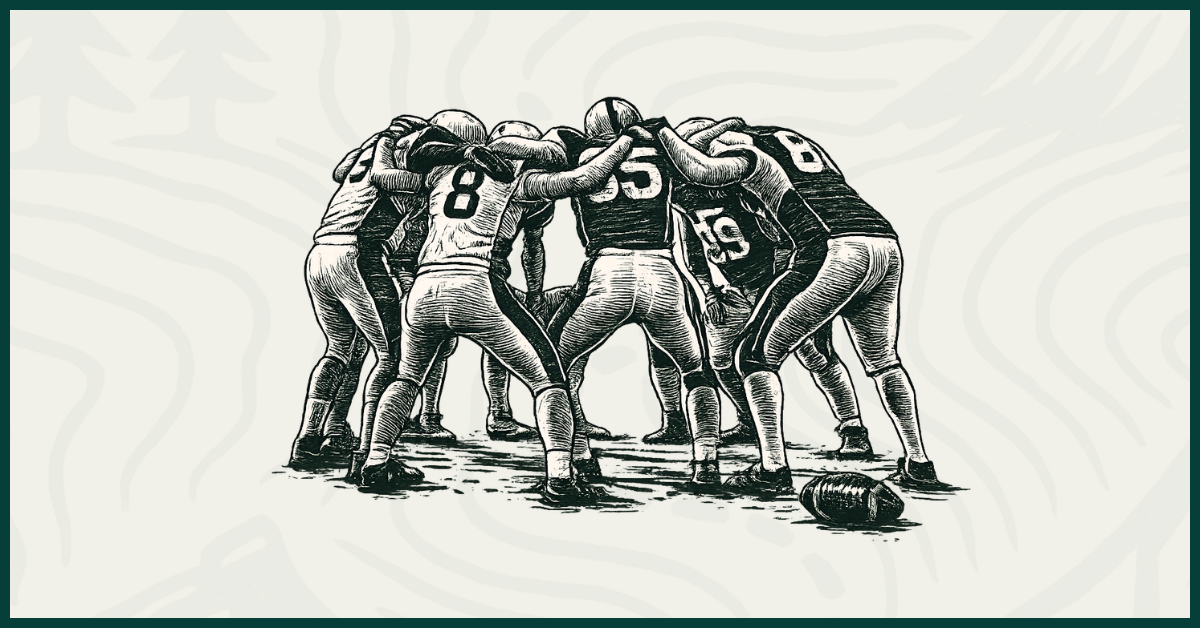
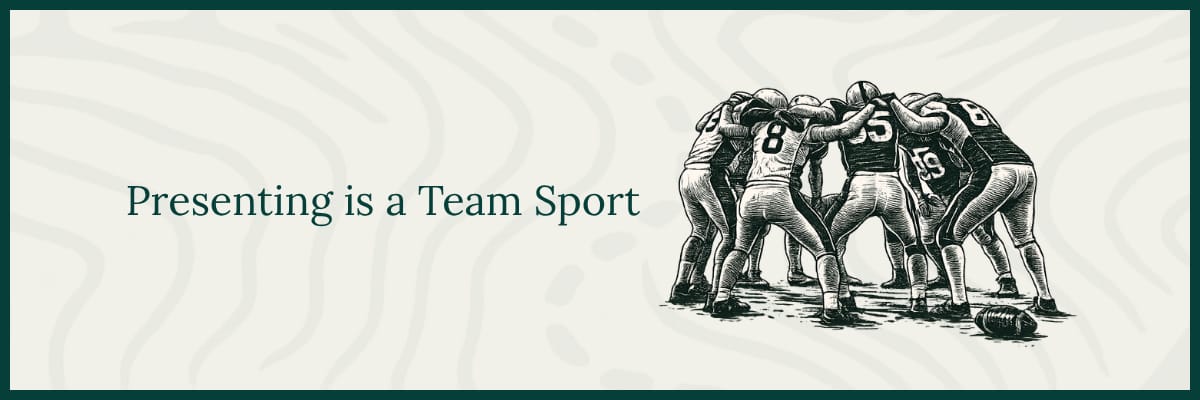
Presenting is a Team Sport
Presenting is a Team Sport
Still hero-balling it? Your idea deserves better.

Eric Harris
April 17, 2026
“No one can whistle a symphony.”
Real leaders don't just present ideas and hope they land. They design moments where belief can form. And building belief, it turns out, isn't a solo act.
Hero-balling the prep is a costly habit. Writing the presentation alone. Rehearsing alone. Sharpening the message alone. It feels efficient. It feels like control. It feels like ownership.
But it’s actually a shortcut in discipline’s clothing.
There's a proverb that cuts clean through it. Alone, you go faster. Together, you go farther. Under deadline pressure, many leaders pick speed and call it strategy. Then they wonder why the room nods politely and nothing moves.
The Myth of the Lone Genius
We inherited this one from the stage. One person, one mic, one transformative idea. It's a beautiful fantasy, and it might be wrecking your prep.
A presentation isn't a performance you deliver to an audience. It's a moment you design with the audience in mind. That design work is too big for one brain, and if you're honest with yourself, you already know it. Your blind spots are, by definition, the ones you can't see. Someone has to point at them for you. If no one's pointing, you're not presenting strategically. You're just presenting alone.
It’s Not Golf
So stop treating rehearsal like a trip to the driving range. The most underused move in presentation prep is the two-audience rehearsal. Pull in one person with a stake in the outcome. Pull in one person without. Run it for both.
The stakeholder tells you where the argument wobbles. They know the politics, the history, the landmines. They'll catch the claim that's going to get you chewed up in the real room.
The outsider tells you where the argument's opaque. They've got no context to fill in your gaps, which means they'll experience your message the way most of your audience actually will. If it lands for them, it's got a chance. If it doesn't, stop polishing the deck and start fixing the idea.
Plus the bystanders will give you feedback the stakeholders won’t. They’ll evaluate you. Your delivery. Your presence. Your authenticity.
One of them alone isn't enough. You need both kinds of pressure, because you're going to face both when it counts.
The Right Kind of Friction
Try quantifying the benefits of your idea alone and you'll believe your own numbers every time. Every assumption looks reasonable when there's nobody in the room to question it. That's not rigor. That's an echo.
Put a teammate across the table with a different vantage point and watch what happens. The soft numbers suddenly become firmer. The aggressive claims get honest. The message earns its shape through friction, not in spite of it.
Friction isn't failure. It's how the idea gets strong enough to carry. If your prep process has none of it, that's not a sign you've got it right. That's a sign you haven't been challenged yet.
But What If We…
Every storytelling framework worth using — The Sonata, The Movie Trailer, any of them — gets sharper in a room full of people asking but what if we…
One person writes a story. A team finds the better one. Structure isn't built in isolation. It's stress-tested into shape by people willing to say I'd start here instead, or this middle's dragging, or you're burying the part that actually matters.
You can't hear those notes by yourself. You wrote the thing. You're the least qualified person to edit it cold.
Buy-In Starts Early
Here's the gift of the team approach. The people you pull in while the clay's still wet become advocates before the meeting begins. They've got fingerprints on the message. They've got stakes in the outcome. They're not an audience anymore. They're your chorus.
You stop having to sell the idea in the room because half the room already helped build it. That's not politics. That's how movement actually starts. And if the thought of sharing the clay makes you nervous, ask yourself what you're really protecting… the idea, or the ego?
Who's On Your Crew?
Your presentation team isn't a fixed roster. It's specific to this idea, this audience, this moment. It's the people you trust to tell you the truth, not the people who make you feel good about the draft. There's a difference. You know the difference.
It's yours to build. So build it on purpose.
-
Who's got a stake in this outcome that you haven't invited in yet?
-
Who'll tell you the thing your boss won't?
-
Whose but what if we… have you been ghosting, and why?
-
Who experiences the world the way your audience does, and when are you running it past them?
-
If this presentation succeeds, who gets to share the win?
The team you prepare with has the potential to be the medium for your idea. Choose it like it matters.
Go Together
Your next presentation doesn't have to be yours alone. Neither does the training.
Gather Round runs leadership team workshops built for groups of about ten — the right size to practice the team-sport version of presenting, together. Bring your crew. Build the muscle in the room where you'll use it.
🔥 Hi, I’m Eric, and every week, I share insights, observations and tools so you can ditch decks and light a fire in your high-stakes presentations. If you like what you see here, follow me on LinkedIn.