
A Blog with Tips & Tricks for Enlightened Presenters

Projections of People
Projections of People
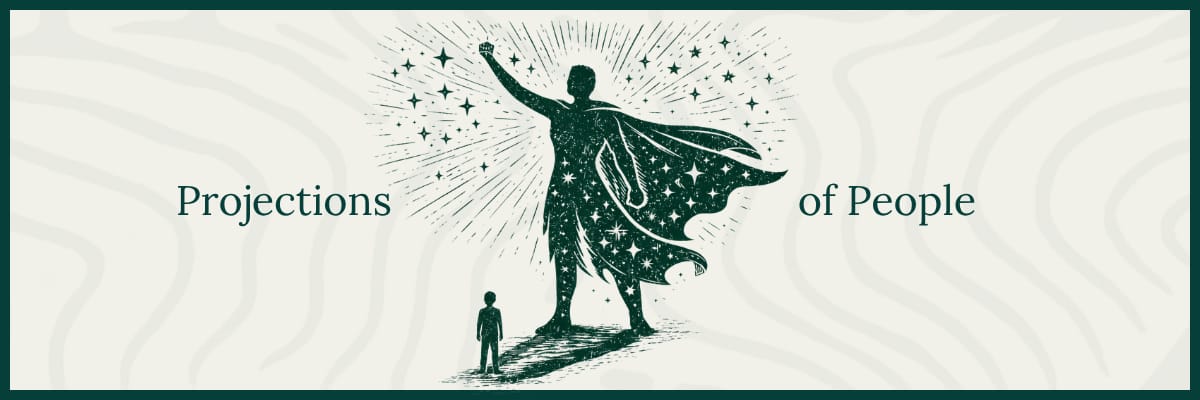
The audience you think you're addressing might exist only in your head.

Eric Harris
May 22, 2026
You Decided Who They Were
Here’s a hard pill to swallow on a Friday: the audience you prepared for almost never shows up. Some other audience does. They sit in the same chairs, eat the same lukewarm pastries, wear the same lanyards… and they are not the people you built your story for.
You didn't notice because you were busy. You were rehearsing transitions. You were worrying about the logo placement on the third slide. You were running the clock in your head. And somewhere underneath all that motion, you made a decision about who's listening. Usually a flattering version. Hungry. Curious. Ready. Halfway to yes.
That decision is the villain. Not the slides. Not the nerves. Not the timing.
The audience you think you're talking to.
A Founder, a Survey, and a Surprise
I'm working right now with the founder of a benefits consulting practice. He's good. Like, real good. His presentations already land. But this week he's stepping onto a stage that matters more than the others—a room of senior HR and operations leaders, every one of them a target buyer, every one of them holding a budget that could change his firm's year.
He came to The Campfire Method because the stakes were unusually high and he didn't want to risk it. So before we ever opened a deck, he did something most leaders skip: he surveyed his audience. He asked them what they expected from the talk. He asked them how they felt about their own benefits strategy. Then we sat down with what came back.
We expected to find Disruptors. People leaning forward, living in the future. People hungry for the next way to challenge the status quo. Aspirational people, motivated by change.
Instead, we found Underdogs.
The data told us this audience feels oppressed by their current situation. They often feel like punching bags inside their own organizations. These are people who, deep down, believe they're capable of remarkable things and can't shake the sense that a massive force is holding them down. Some have drifted into complacency because that’s what's left when you've been swinging at the same wall for years. And underneath it all, a real and rising urgency about healthcare costs.
That is not the audience he'd prepared for.
Naming the Audience Correctly
Here's what didn't change: his expertise, his data, his core argument, his command of the material.
Here's what did change: everything else.
He's not walking in assuming hunger for innovation anymore. He's walking in knowing the people in front of him need to feel recognized before they can be challenged. He's leading with the world as it is for them—the punching-bag years, the held-back capability, the exhaustion—and only then opening the door to the world that could be.
It's the difference between a talk that informs an audience and a talk that gives an audience permission to believe something new is possible. One of those moves product. The other moves people.
And he didn't get there by being a better presenter. He got there by being more empathetic. A better reader of the audience before they arrived. The performance hasn't happened yet. The work already has.
You Can't Outsource Empathy
Real leaders don't just present ideas and hope they land. They design moments where belief can form. That design starts long before anyone takes a seat. It starts with a posture—the willingness to assume you don't yet know who's listening, and the discipline to find out before you write a single line.
Most leaders skip this. Not because they're lazy. Because they're confident. Confidence is the anesthetic. It grants you the confidence to walk into a room you've never met and assume you already know what the audience wants. It lets you build a talk for the people in your head instead of the people in the seats. And it lets you blame them afterward when nothing changes.
So you stop asking What do I want to say? and start asking Who is actually in front of me, and what do they need to feel before they can hear me?
Everything tactical downstream of those questions builds massive steam for your presentation.
It All Clicked
As I write this, we’ve just finished his dress rehearsal. The event itself is later this week. I don't know yet how it'll land. Neither does he. You do the preparation, you make the turn, trust the design, and then you walk into a hotel ballroom and find out what's true.
What I know is he's walking in as a different kind of presenter than he was three weeks ago. Not flashier. Not louder. Steadier. He's not delivering a talk to an audience. He's stepping into a room having learned to see the people who'll fill it.
No one’s listening yet, but the work is already done.
Before Your Next High-Stakes Presentation
Don't take a lesson from this. Take the questions.
-
Who do you think is in your next audience, and how did you arrive at that conclusion?
-
When was the last time you actually asked them, instead of assuming?
-
If they turned out to be Underdogs instead of Disruptors, what about your presentation would deserve to change?
-
What does recognition look like in your opening three minutes?
-
Are you preparing a message, or are you designing a moment?
You don't owe me the answers. You owe them to the audience.
“A speaker should approach his preparation not by what he wants to say, but by what he wants to learn.”

When the Audience Isn't Who You Thought
If you've ever walked off a stage wondering why a good talk didn't move anyone, The Campfire Method is the playbook. Learn to read the audience before they read you, and design the moment instead of hoping for it.
🔥 Hi, I’m Eric, and every week, I share insights, observations and tools so you can ditch decks and light a fire in your high-stakes presentations. If you like what you see here, follow me on LinkedIn.